Catamount Machine Works
Customer Success Story
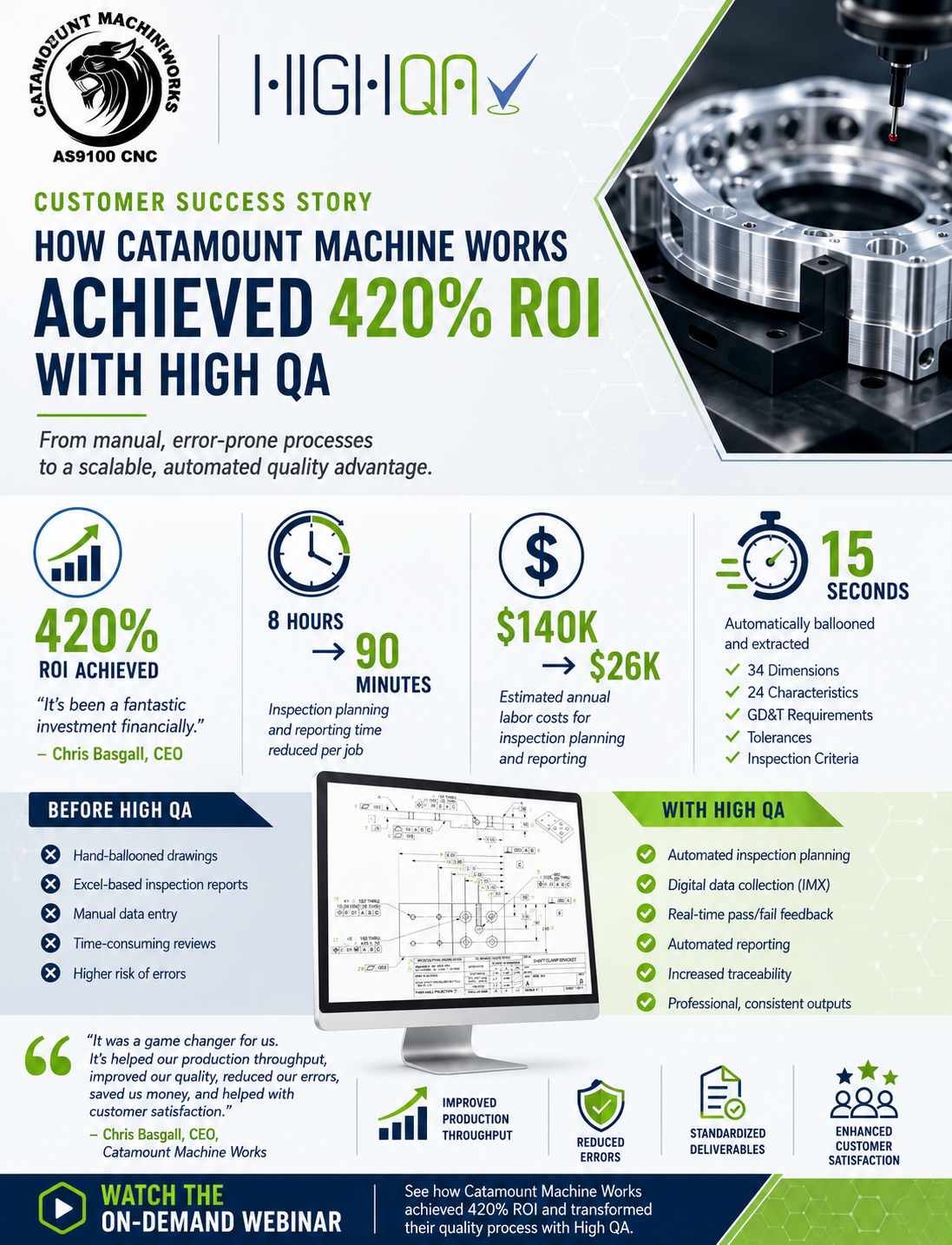
How Catamount Machine Works Achieved 420% ROI by Transforming Quality into a Competitive Advantage with High QA
For many manufacturers, quality processes develop incrementally over time. What starts as a practical solution often evolves into a patchwork of spreadsheets, manual data entry, disconnected documents, and labor-intensive reviews.
As customer requirements become more demanding with tighter tolerances, higher quality expectations, increased documentation requirements, and shorter delivery schedules, these manual processes can become a significant bottleneck.
That was the challenge facing Catamount Machine Works.
By implementing High QA’s quality automation platform, Catamount transformed its inspection and reporting processes, reducing manual effort, improving accuracy, standardizing quality workflows, and achieving an impressive 420% return on investment (ROI).
The Challenge: Quality Processes Built Around Manual Effort
When CEO Chris Basgall acquired Catamount Machine Works, the company’s inspection process relied heavily on manual workflows.
Drawings were ballooned by hand. Inspection reports were created in Excel. Measurement data was entered manually, and quality documentation required extensive review before being released to customers.
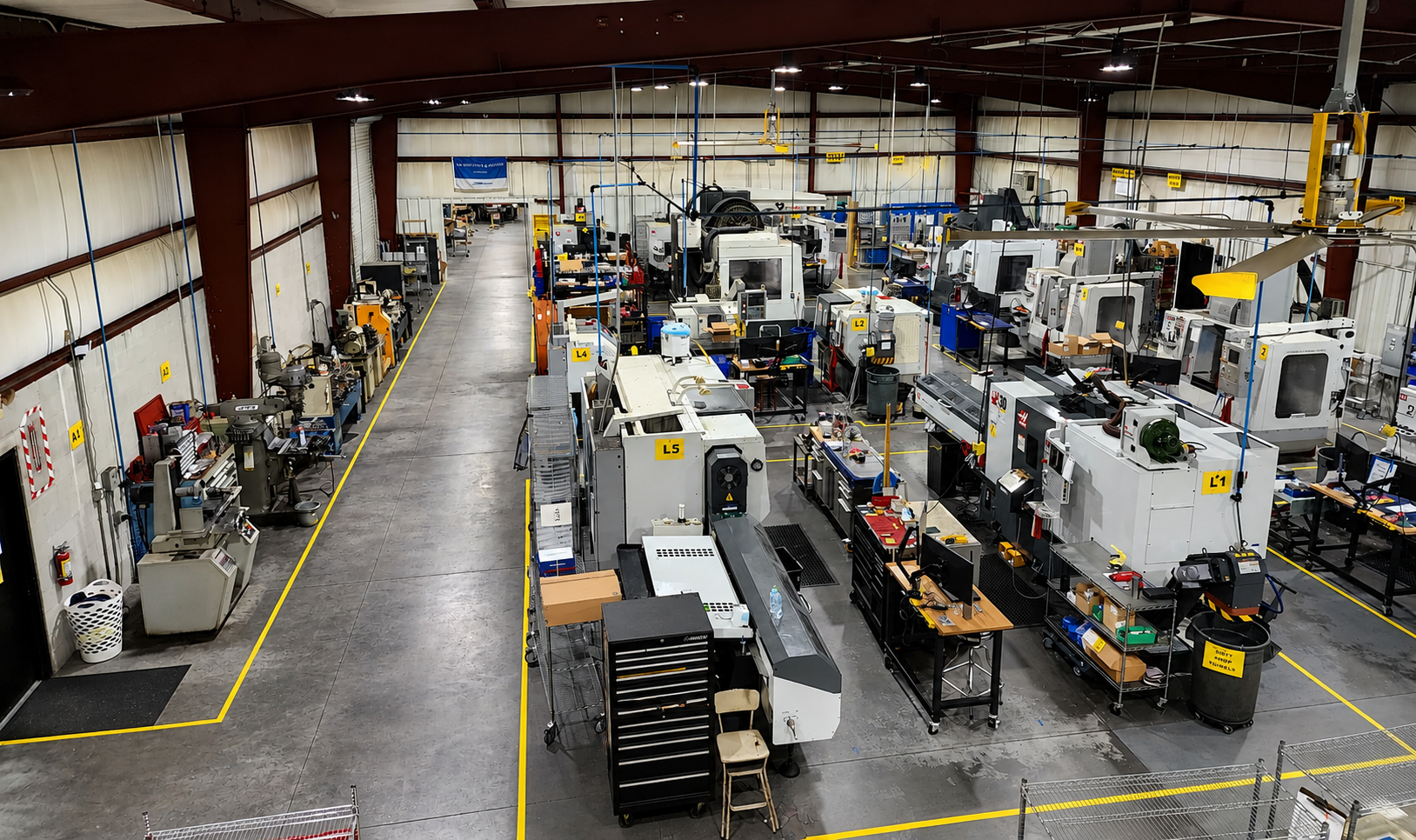
The process worked but it consumed valuable time, increased the risk of errors, and limited scalability.
“We were ballooning drawings by hand and using Excel spreadsheets that we would fill out manually,” said Basgall. “It was very time-consuming and prone to error.”
The issue wasn’t a lack of expertise. Catamount’s team had the knowledge and experience needed to deliver high-quality products.
The challenge was the process itself.
Building the Business Case for Quality Automation
As Catamount evaluated ways to improve efficiency, standardize quality operations, and support future growth, the team conducted a detailed analysis of their existing inspection workflow.
Their findings revealed that inspection planning, report generation, and documentation activities required approximately:
- 480 minutes (8 hours) per job
- 500 inspection jobs annually
- $140,000 in annual labor costs
By automating these activities with High QA, Catamount projected they could reduce effort to:
- 90 minutes per job
- $26,250 in annual labor costs
The projected ROI was 386%.
The actual results exceeded expectations.
“We estimated a 386% ROI, and we’ve been averaging about a 420% return,” said Basgall. “It’s been a fantastic investment financially.”
Eliminating Manual Work at the Source
One of the most significant improvements came from automating inspection planning and report creation.
Before implementing High QA, creating inspection packages required extensive manual effort to identify dimensions, assign balloon numbers, extract requirements, and build inspection reports.
Today, Catamount uses High QA’s automated ballooning and inspection planning capabilities to generate a complete Bill of Characteristics in seconds.
In a recent example, High QA automatically identified and extracted:
- 34 dimensions
- 24 inspection characteristics
- GD&T requirements
- Tolerances
- Inspection criteria
All in approximately 15 seconds.
Beyond the time savings, automation enabled Catamount to establish a consistent, repeatable process across all jobs and customer programs.
“It saves a tremendous amount of time,” Basgall explained. “We now have a standardized approach and can easily accommodate unique customer requirements without recreating everything from scratch.“
Improving Data Integrity Through Digital Inspection
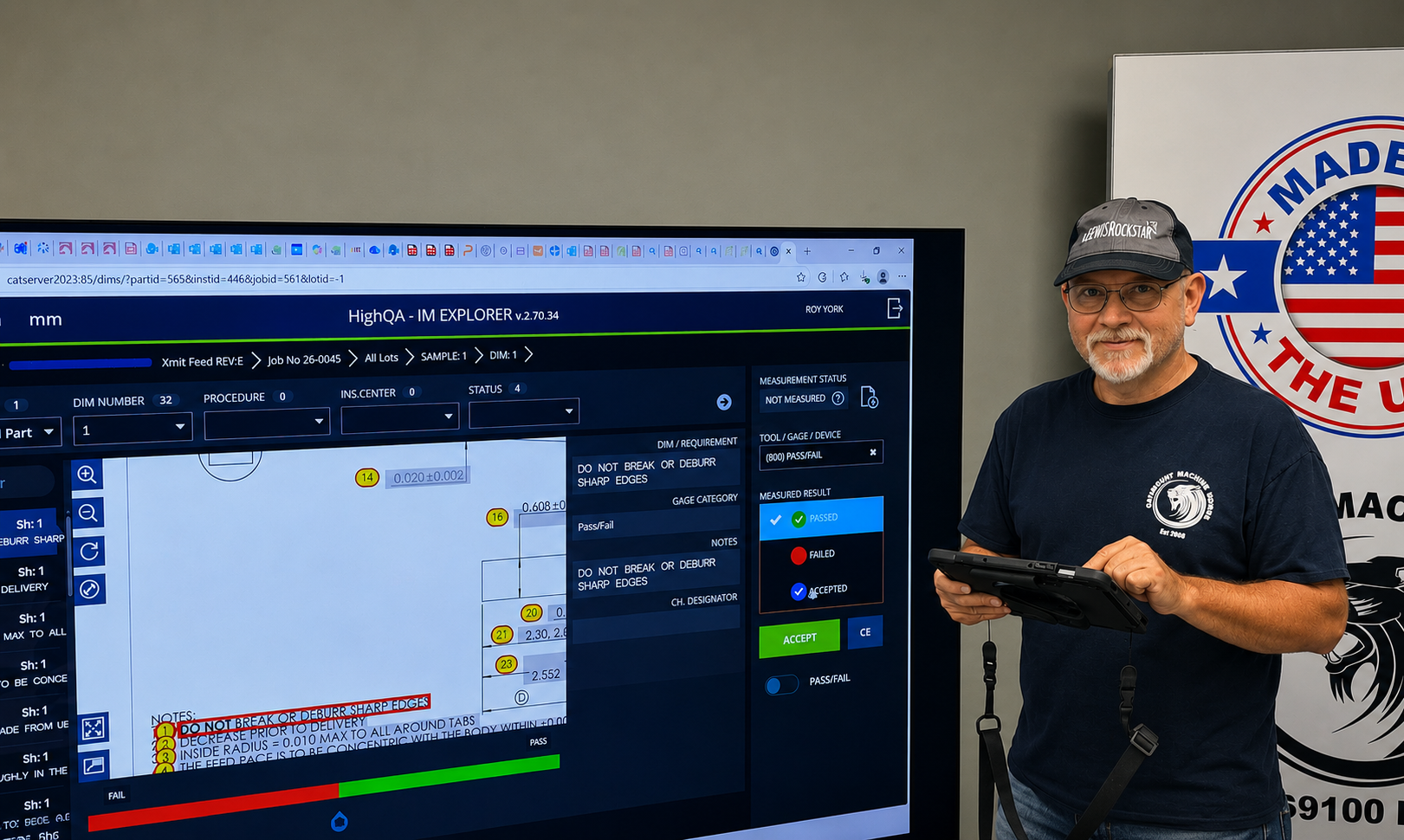
Catamount further enhanced its quality operations by implementing High QA Inspection Manager, a digital inspection and data collection environment.
Instead of manually transferring inspection results between systems and documents, inspectors now enter measurements directly into a controlled digital workflow.
The system provides:
- Real-time pass/fail validation
- Automatic out-of-tolerance alerts
- Immediate nonconformance reporting (NCR) initiation
- Tool and gage traceability
- Live inspection status visibility
- Automated formatting and decimal-place control
The result is a more reliable and efficient inspection process.
“We no longer have to perform exhaustive reviews of every report like we used to,” said Basgall. “The system catches issues as data is entered.”
By preventing errors at the point of inspection, Catamount reduced review time, improved accuracy, and increased confidence in every inspection package delivered to customers.
Meeting Customer Requirements Without Adding Complexity
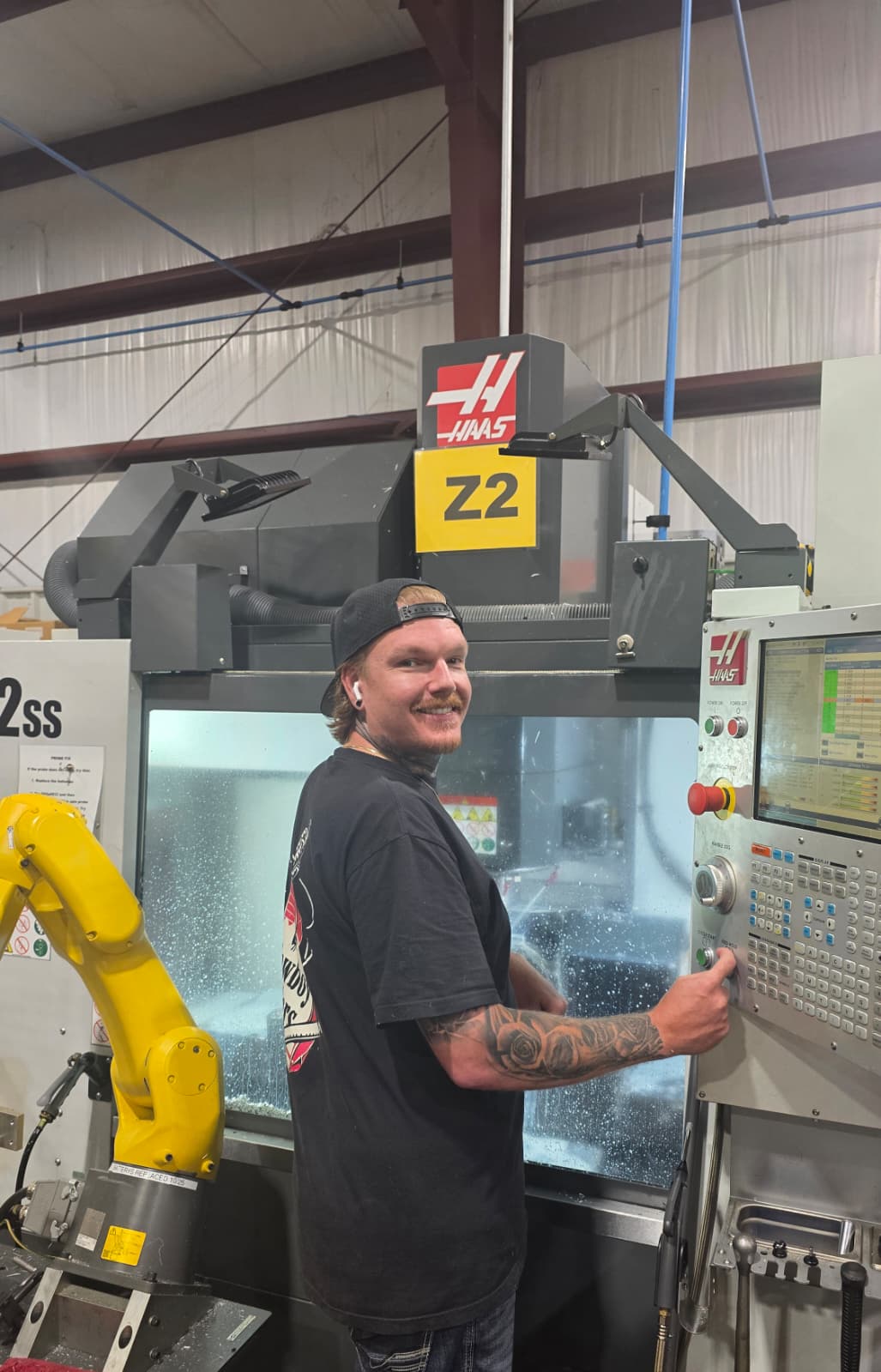
Like many aerospace and precision manufacturers, Catamount serves customers with unique documentation and reporting requirements.
Historically, meeting those requirements meant creating additional documents, manually combining files, and conducting multiple review cycles before delivery.
Using High QA’s configurable reporting framework, Catamount created customer-specific templates that automatically populate information directly from inspection data.
One notable example was the automation of the Certificate of Compliance (CoC).
Previously, the CoC was created separately in Word, signed, scanned, reviewed, and manually merged into the final quality package.
Today, the document is generated automatically using the same quality data already captured within High QA.
“It reduces errors, saves time, and presents a very professional image to our customers,” said Basgall.
Beyond ROI: Creating a Competitive Advantage
While the financial return has been substantial, Catamount views the operational improvements as equally valuable.
By automating and standardizing quality processes, the company has:
- Improved inspection consistency
- Reduced manual errors
- Increased traceability
- Standardized customer deliverables
- Improved production throughput
- Strengthened compliance readiness
- Enhanced customer satisfaction
The impact is visible not only internally, but also in customer feedback.
“Customers consistently tell us our reports are professional and best-in-class,” Basgall said.
Looking Ahead
Today, Catamount continues to expand its use of High QA through advanced reporting capabilities, multi-part inspection workflows, and future exploration of Model-Based Definition (MBD) initiatives.
For Basgall, investing in High QA has proven to be one of the company’s most impactful operational decisions.
“It was a game changer for us,” he said. “It’s improved our throughput, improved our quality, reduced errors, saved money, and increased customer satisfaction.”
Key Results
420% ROI Achieved
Exceeded the original projected ROI of 386%.
81% Reduction in Inspection Preparation Time
Reduced planning and reporting effort from 8 hours to approximately 90 minutes per job.
Improved Quality and Data Integrity
Automated validation and digital workflows reduced manual errors and review cycles.
Standardized Customer Deliverables
Consistent, professional reports that customers describe as “best-in-class.”
Scalable Quality Operations
A repeatable quality process capable of supporting continued business growth without increasing administrative burden.
Conclusion
Catamount Machine Works demonstrates how quality automation can deliver far more than labor savings.
By replacing manual, error-prone processes with a standardized digital quality workflow, the company improved efficiency, strengthened compliance, enhanced customer satisfaction, and created a measurable competitive advantage.
For manufacturers facing growing quality demands, tighter schedules, and increasing documentation requirements, the lesson is clear:
The greatest improvements don’t come from working harder, they come from building smarter, more scalable quality processes.
About High QA
High QA is a manufacturing quality platform that connects design requirements to execution. We make the 2D drawing or 3D model the single source of truth by automatically extracting quality requirements and linking them directly to inspection planning, inspection execution,
NCRs, and quality reporting. This reduces manual interpretation and re-entry across teams and systems, improves traceability, and helps ensure parts are built and verified to spec.